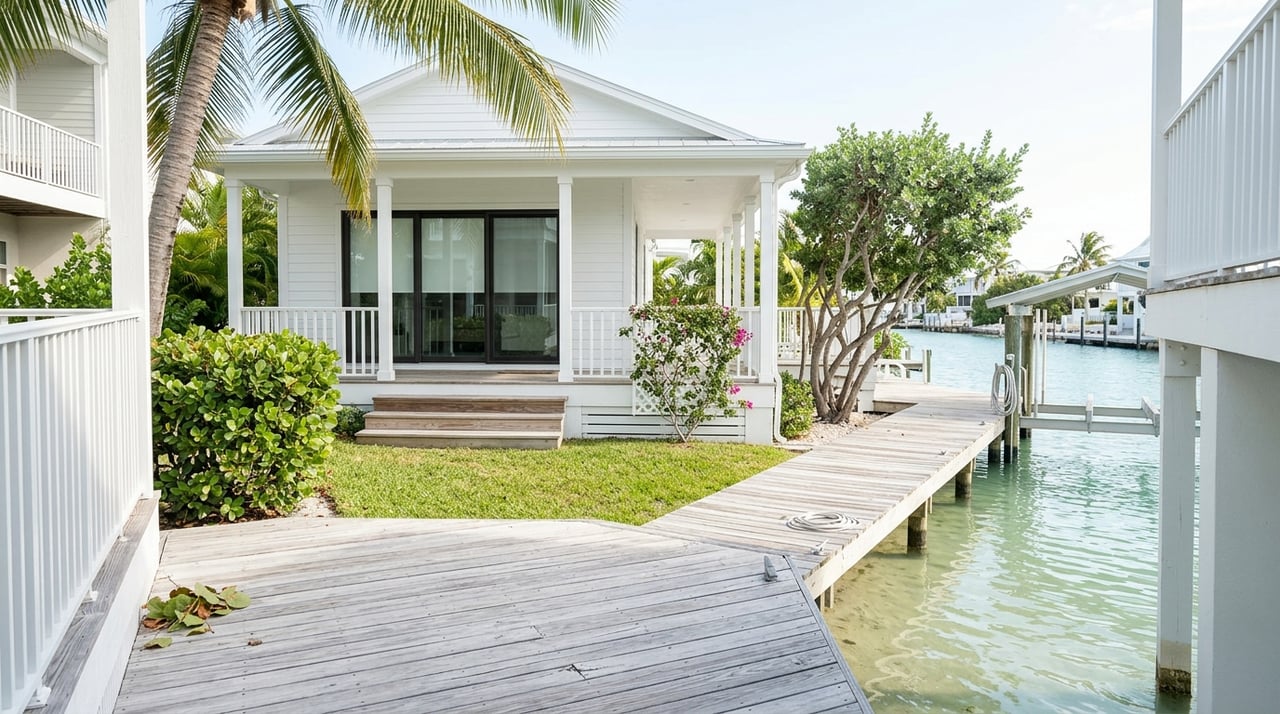
What if one of the biggest perks of owning in Key Colony Beach is using your car less, not more? In a compact island city, daily life can feel simpler when short drives, bike rides, and walks replace constant time behind the wheel. If you are exploring a second home, seasonal property, or waterfront purchase here, understanding how a car-light routine actually works can help you choose more confidently. Let’s dive in.
Why car-light fits Key Colony Beach
Key Colony Beach is small by design and scale. Monroe County’s comprehensive plan update describes the city as 219 acres, and the 2020 Census counted 790 residents and 1,003 housing units. That creates a setting that feels compact, manageable, and easy to learn quickly.
For many buyers, that scale is part of the appeal. You are not looking at a place built around long daily commutes or sprawling distances. Instead, Key Colony Beach supports a lifestyle where shorter local trips can feel practical, especially when you are heading to nearby recreation or waterfront amenities.
It is important to call this car-light, not car-free. Local rules and the physical layout support lower-speed movement and shorter in-town trips, but you still want a vehicle for many errands beyond the island or for exploring the wider Middle Keys.
Local rules shape the pace
Part of what makes Key Colony Beach feel different is that city rules reinforce a slower, more orderly environment. The street speed limit is 25 mph, which naturally supports a calmer rhythm for drivers, cyclists, and pedestrians. That low-speed framework is a real part of daily life here.
The city also allows electric bicycles on streets up to 25 mph. On the multi-use or exercise path, electric bicycles are limited to 10 mph. At the same time, motorized scooters, hoverboards, and skateboards are prohibited, which helps define what kinds of mobility fit the city best.
Parking rules matter too. No parking is allowed in the multi-use or exercise path, and parking on streets and in city-owned areas is tightly controlled. On 1st through 5th Streets and East Ocean Drive, parking is prohibited unless the owner gives permission.
That may sound strict at first, but for many owners it is part of what preserves the city’s easygoing feel. Fewer random vehicles, lower speeds, and more structured parking can make the island feel more predictable day to day.
What a typical day can look like
A car-light routine in Key Colony Beach often starts with the idea that not every outing needs to involve loading up the car. If your property is close to local amenities, a walk or bike ride can become the default for a quick change of scenery, a sunset outing, or a recreation break. That is especially appealing for seasonal owners who want daily life to feel easy.
Public gathering spaces help make that possible. Sunset Park is public and closes at sunset, and the city notes additional parking at Gazebo Park. That setup supports the kind of low-key routine many buyers picture when they think about island living.
Recreation also adds to the appeal. City updates referenced a court project at 7th and 8th Streets with 2 tennis courts and 6 pickleball courts, and February 2025 city minutes refer to the completion of new tennis courts. The city also identifies a Par 3 Golf Course manager, and city financial statements reference a golf-course lease, confirming golf as an established local amenity.
For some owners and guests, the Cabana Club is another daily-life anchor. The Florida Keys tourism directory describes it at 425 E Ocean Dr as a private retreat with a sandy beach, a 65-foot heated and cooled pool, a spa or whirlpool, a full bar, and a beach shop. The same directory notes that Cabana Club amenities are typically included with some Key Colony Beach vacation rentals.
Why buyers should think beyond the map
When you are shopping in Key Colony Beach, the car-light lifestyle is not just about distance. It is also about how a property functions with your habits. A home that works well for short bike rides, waterfront downtime, and simple in-town movement may feel very different from one that requires more vehicle juggling, trailer planning, or parking workarounds.
This is especially true for second-home buyers and seasonal residents. If you picture relaxed mornings, easy sunset outings, and less time thinking about logistics, then rules around parking, path use, and storage should be part of your home search from the start.
For investor-minded buyers, the same point applies. Guest experience is often shaped by convenience, and convenience in Key Colony Beach includes understanding where vehicles can park, what is allowed on-site, and how local movement actually works.
Housing choices that support island living
The local housing mix appears to offer several ownership options. City regulations center on low-density residential use, with R-1A intended for detached single-family homes and R-2A accommodating one- and two-unit dwellings. The city fee schedule also distinguishes single-family, duplex, and condominium or co-op properties, which strongly suggests a market that includes detached homes, duplex or half-duplex product, and attached inventory.
That variety matters because your ideal car-light setup may depend on how you plan to use the property. Some buyers want a detached waterfront home with room for boating and outdoor living. Others prefer a lower-maintenance attached option or a duplex-style property that keeps ownership simpler.
The zoning rules also explicitly allow private boat docks or piers, dockside shelters, pools, and tennis courts as accessory uses in the applicable districts. For buyers focused on waterfront living, that helps explain why Key Colony Beach is often attractive to people who want both a home base and direct access to island recreation.
Waterfront ownership comes with details
In Key Colony Beach, waterfront living often goes hand in hand with practical planning. The city’s seawall manual says almost all waterfront lots are protected by seawalls and advises buyers to evaluate seawall condition carefully. If you are buying canal-front or waterfront property, that is not a small detail.
Waterfront use is also governed by local rules. Waterways require idle-speed and no-wake operation, boat length is limited to the waterfront property lines available with the house, and living aboard vessels is prohibited. Those rules help define what boat ownership looks like in practice.
This is one area where local guidance really matters during a purchase. A property may look ideal in photos, but dock setup, seawall condition, and boat fit can all affect whether the home works for your plans.
Parking and trailers matter more than buyers expect
One of the easiest mistakes buyers make is assuming island parking works like it does in a less regulated market. In Key Colony Beach, parking in the city right-of-way is restricted to the property owner, invited guests, and renters. Street parking is also restricted except as otherwise allowed by law.
The city further limits what can be parked on-site. Only one recreational vehicle, boat, utility trailer, or personal watercraft trailer may be parked within property boundaries per dwelling unit. Vehicles or trailers also may not be used as a residence, even for one night.
If you own a boat or expect visiting family to bring extra gear, these rules should be part of your buying decision. Temporary boat-trailer parking may be available in a designated area off 8th Street, but that is very different from assuming unlimited flexibility at the property itself.
Vacation rental buyers should pay attention
If you are considering a property with vacation-rental potential, Key Colony Beach has rules that directly affect occupancy and operations. Current rules cap occupancy at 2 persons per bedroom plus 2 in a living room, with a gross maximum of 10, along with additional square-footage limits. The city fee schedule also shows separate business-tax categories for vacation rentals in single-family or duplex properties and in condo or co-op product.
That means the property type you choose can influence how you plan future use. It also means that guest convenience, including parking and amenity access, should be considered alongside nightly appeal. In a compact city like Key Colony Beach, operational details are part of the ownership experience.
What to look for in the right property
If the idea of car-light island living appeals to you, focus on the details that shape everyday ease. The right home is not just attractive on paper. It should support the way you actually want to live when you are in the Keys.
Here are a few smart things to evaluate:
- Distance to the local amenities you expect to use often
- Parking configuration and how guest parking works
- Space for a permitted trailer or watercraft setup
- Seawall condition on waterfront lots
- Dock layout and whether your boat fits within property-line limits
- Property type, especially if you are comparing single-family, duplex, or condo-style options
- Vacation-rental rules if income potential matters to you
A thoughtful home search in Key Colony Beach should connect lifestyle goals with local rules. That is where market knowledge becomes especially valuable.
Why local guidance makes a difference
Because Key Colony Beach is compact, regulated, and highly lifestyle-driven, small property details can have an outsized impact. Two homes may seem similar online, yet one may be far better aligned with your boating plans, guest needs, or day-to-day routine. That is often where experienced local insight can save time and stress.
If you are weighing a purchase or preparing to sell in Key Colony Beach, working with someone who understands waterfront considerations, property positioning, and island-specific rules can help you make sharper decisions. When you are ready to explore homes or talk through your options, connect with Tracy Chacksfield for a polished, hands-on approach tailored to the Middle Keys lifestyle.
FAQs
Is Key Colony Beach truly walkable for daily life?
- Key Colony Beach is best described as car-light rather than fully car-free. Its compact 219-acre size, low speed limits, and local recreation amenities can make walking or biking practical for many in-town trips.
Are electric bikes allowed in Key Colony Beach?
- Yes. Electric bicycles are allowed on streets up to 25 mph, and they are limited to 10 mph on the city’s exercise path.
Can you park freely on streets in Key Colony Beach?
- No. Parking is tightly regulated, and parking is prohibited on 1st through 5th Streets and East Ocean Drive unless the owner gives permission.
What should waterfront buyers in Key Colony Beach check first?
- Waterfront buyers should closely review seawall condition, dock setup, and whether boat length fits within the waterfront property lines available with the home.
Does Key Colony Beach allow vacation rentals?
- City rules and fee categories indicate vacation rentals exist in single-family, duplex, and condo or co-op property types, but occupancy limits and other local rules apply.
Can you live in an RV or on a boat in Key Colony Beach?
- No. City rules state that vehicles or trailers may not be used as a residence even for one night, and living aboard vessels is prohibited.