If you dream of stepping from your back door onto a boat, the Middle Keys make that picture real. The question is which kind of waterfront fits you. Oceanfront, bayfront, canal-front, and marina settings each shape your views, your boating day, your maintenance list, and even your insurance. This guide breaks down what life looks like in 33050 and how to plan smart due diligence so your Keys home delivers the waterfront you expect. Let’s dive in.
Middle Keys map and lifestyle context
When locals say “Middle Keys,” they often mean Marathon and the nearby islands that share the 33050 ZIP code. The City of Marathon stretches across several islands and includes Vaca Key and Boot Key Harbor, the area’s major marina and mooring hub. You can get a feel for facilities, ramps, and mooring culture by browsing the City of Marathon Marina and Ports resources.
Nearby, Duck Key and its resort-marina scene at Hawks Cay show what full-service boating convenience looks like, while Key Colony Beach illustrates a compact, canal-forward community with quick dock-to-ocean runs. Marathon layers in everything from the big-boat vibe at Faro Blanco to public ramps and smaller dockside marinas. Together, these examples show the range of waterfront lifestyles available within a short drive.
Waterfront types and daily life
Oceanfront (Atlantic-facing)
If you want open horizons and short runs to the reef, oceanfront is your front-row seat. Many oceanfront owners follow the Atlantic’s Hawk Channel corridor to reach patch reefs and offshore grounds. To picture the typical run and reef style, skim this local primer on fishing the Keys patch reefs and shallow reefs.
Trade-offs are clear. You gain wide views and blue-water access, but you also face more swell exposure, stronger wind-driven chop, and heightened permitting scrutiny for shore work close to sensitive habitats. The state’s Coastal Construction Control Line program explains why ocean-exposed parcels often see tighter review for shoreline projects. For background, see Florida DEP’s overview of the coastal construction and habitat conservation framework.
Gulf/Bayfront (Florida Bay side)
On the bay side, water is often gentler. Think skiffs, paddlecraft, bird life, and big-sky sunsets, especially along the north-facing shoreline. Navigation is more about tides and draft. Seagrass flats are common, and environmental protections guide where you can anchor or alter the bottom. The Florida Keys National Marine Sanctuary summarizes rules and zones that shape on-water behavior in the bay and beyond. Review the Sanctuary regulations and guidance as you weigh bayfront living.
Canal-front (residential canals)
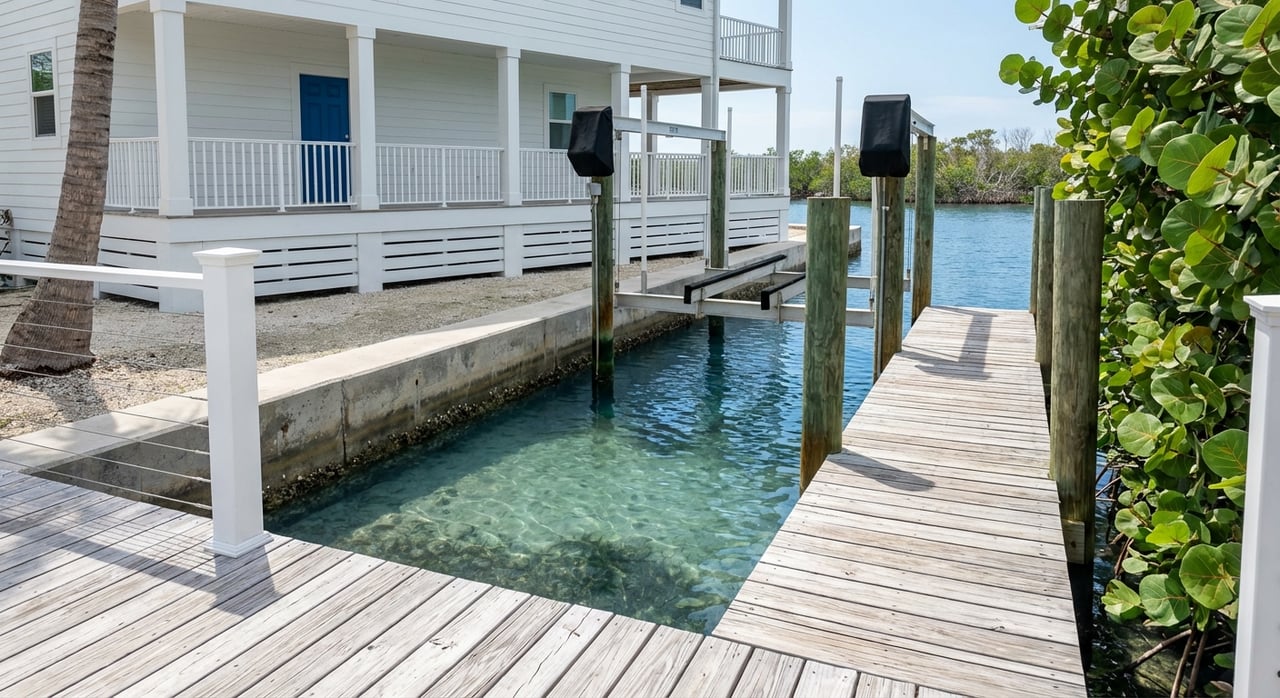
Canal-front living is about everyday convenience. Many homes have a dock in the backyard, and you can be underway within minutes of breakfast. Before you fall in love with a canal address, match your boat to the canal’s depth and width and verify the recorded permit history for the dock and any lift. Seawall age and condition, lighting, and power all matter. This overview of dock and seawall planning provides a practical lens on what to confirm in the Keys. Read about planning docks and seawalls to frame a smart inspection list.
The lifestyle feels more neighbor-facing than a wide oceanfront lot. You swap sweeping horizons for easy boarding and short no-wake trips to open water. For many boaters, that trade feels perfect.
Marina-oriented living
If you prefer services over backyard maintenance, marina-oriented living is a strong fit. Slip access, shore power, fuel, pump-out, and haul-out are on site, and social life tends to gather on the docks. You will pay slip fees and share space with transient boaters, but you also step away from personal dock upkeep. In Marathon, Faro Blanco reflects the full-service marina vibe, while resort marinas at Duck Key offer a similar convenience with a resort setting. Many buyers pair a home or condo without a private dock with a long-term slip arrangement to get the best of both worlds.
Boating access and rules
Boot Key Harbor is the Middle Keys’ protected boating heart. The City manages a large mooring field and marina services that support full-time residents, cruisers, and weekend boaters. For local context on approaches, controlling depths, and services, start with the City of Marathon Marina and Ports.
On the Atlantic side, Hawk Channel runs behind the reef and serves as the main corridor for ocean runs and reef trips. If fast access to the reef is on your must-have list, compare ocean-exposed addresses or marinas that face the Atlantic to sheltered bay or interior canal options. For an angler’s-eye view, this Keys resource on patch reef and shallow reef fishing shows where many ocean days begin.
The entire Keys fall within a federal No-Discharge Zone, and the Sanctuary enforces rules that protect reefs and seagrass. Expect to use pump-out services and abide by anchoring and mooring guidance. The Sanctuary’s page on regulations and protected areas is a helpful orientation before you set up a slip or plan regular anchoring.
Permits, flood, insurance, wastewater
Shoreline projects involve multiple agencies. New docks, seawalls, lifts, or dredging often require reviews by city or county building departments, Florida DEP, the Florida Keys National Marine Sanctuary, and sometimes the U.S. Army Corps. Timelines are measured in months for larger work, and pre-application surveys are common. To understand why ocean-exposed sites see extra scrutiny, review DEP’s coastal construction and habitat guidance in the coastal construction program overview.
In Florida, the state holds title to most sovereignty submerged lands. If a dock or access crosses state-owned bay bottom, it may rely on a state consent or lease that needs to be in good standing. This can affect transfers at sale and what you are allowed to repair or rebuild. For the legal backbone, see Florida Statutes Chapter 253 on state-owned submerged lands and ask your title team to pull any recorded leases.
The Middle Keys sit in a coastal floodplain. Marathon encourages owners and buyers to check FEMA maps, base flood elevations, and Elevation Certificates as part of every transaction. The city’s flood pages outline the basics and why lenders often require flood coverage. Start with Marathon’s flood safety and map resources to frame your questions for your insurer and lender.
Hurricane history is real here. Hurricane Irma in 2017 shaped building practices and insurance markets across the Keys. Wind and flood exposures remain material to carrying costs, and hurricane deductibles vary. Monroe County’s Irma pages offer a window into the event and the recovery that followed. Browse the county’s Hurricane Irma information to understand the backdrop for today’s resilience standards.
Insurance rules continue to evolve. Programs like NFIP’s Risk Rating 2.0 and state-backed coverage have changed how premiums are set. Instead of relying on national averages, get property-specific quotes from a Keys-experienced broker early. Local advocacy groups like FIRM Keys track these shifts and can help you ask the right questions.
Wastewater is another must-check item. The Keys spent years upgrading away from septic and cesspools to regional sewer systems and treatment. Some islands are fully connected, while others have mixed conditions. Whether a parcel connects to sewer influences permitting and water quality. The Florida Keys Water Quality Improvements Program offers a high-level view of this work; start with this summary of the regional wastewater upgrades and then confirm the status for any address in your contract.
Environmental protections shape shoreline choices. In some areas, living-shoreline or hybrid stabilization is discussed as an alternative to vertical seawalls. If you anticipate shoreline work, ask early about habitat-friendly options during permitting and design.
Maintenance realities
Salt, sun, and humidity accelerate wear. Waterfront owners in the Middle Keys budget for regular dock and lift servicing, anti-fouling care for hulls, seawall inspections, and corrosion-minded electrical upkeep. Boats that stay in the water need reliable pump-out routines because the Keys are a No-Discharge Zone. Florida Sea Grant’s clean boating resources on sewage solutions and pump-outs are a good refresher.
Even well-built homes see faster aging of screens, railings, fixtures, and exterior metals near open water. A trusted local contractor can lay out realistic maintenance cycles for your specific materials and exposure.
Buyer due diligence checklist (33050 waterfront)
Use this checklist as you start conversations with sellers and your agent. It will help you match your boating style and budget to the right property.
- Confirm the precise waterfront type and legal water lines. Ask for recent surveys that show mean high- and low-water lines and any submerged-land leases that may run with the property. See Florida’s guidance on state-owned submerged lands.
- Verify the dock. Request the dock’s permit history, any lift permits, recorded dimensions, allowable boat length and draft, and who maintains it. This Keys-focused overview of docks and seawalls can help shape your questions.
- Check depth and approach for your boat. Ask for recent soundings or canal records and compare them with your draft and the route to open water. The City of Marathon Marina and Ports is a good starting point for local depth and approach context.
- Pull the flood map and Elevation Certificate. Marathon’s flood safety page explains why nearly all parcels in the Keys require flood diligence. Share the EC with your lender and insurer early for preliminary quotes.
- Confirm wastewater service. Determine if the home is connected to municipal sewer or relies on an on-site system. The Keys’ upgrade history is summarized in this water quality improvements program. Your inspection should verify current connections.
- Review permit history for shoreline work. Docks, seawalls, dredging, and mangrove trimming often require multi-agency approvals. Florida DEP’s coastal construction guidance highlights why reviews take time.
- Understand HOA or marina rules if applicable. Rules on slip assignments, guest docking, noise, and reserves affect both lifestyle and carrying costs. Get documents and fee schedules in writing.
- Note environmental constraints. Sanctuary zones, seagrass, and living-shoreline recommendations can limit dredging or shape stabilization options. Review the Sanctuary’s regulations and ask your permitting team what applies at the address.
- Price maintenance and insurance with local pros. Ask a Keys marine contractor for dock and seawall lifecycle estimates, and a Keys-experienced insurance broker for flood and wind quotes. Use Florida Sea Grant’s sewage solutions guide as a pump-out planning resource.
- Weigh hurricane context. Review Monroe County’s Hurricane Irma information and ask about any post-storm repairs or elevating work at the property. Confirm wind mitigation credits and hurricane deductible details with your insurer.
Putting it together
Choosing among oceanfront, bayfront, canal-front, and marina-based living comes down to how you plan to use the water. If your perfect day is a sunrise run down Hawk Channel and a lunchtime tie-up, prioritize ocean access and sturdy shoreline infrastructure. If you love quiet sunsets and flats fishing, a bay address that trades speed for calm might be ideal. If convenience is king, a canal or marina slip that fits your boat and budget will likely win.
Whatever you pick, a little front-end diligence goes a long way. Match your boat to your dock and approach, confirm flood and sewer details, and plan for realistic maintenance. With the right plan and a local guide, the Middle Keys can deliver exactly the waterfront life you want.
If you are ready to compare options in Marathon, Key Colony Beach, or Duck Key, let’s talk about your priorities and set up a few on-water tours. Connect with Tracy Chacksfield to Schedule a Tour and start narrowing your shortlist.
FAQs
What are the main waterfront types in Marathon 33050?
- You will choose among oceanfront, bayfront, canal-front, and marina-oriented settings, each with different views, boating access, maintenance needs, and permitting considerations.
How does flood insurance work in the Middle Keys?
- Most parcels sit in a coastal floodplain, so lenders often require flood coverage; get the FEMA map and Elevation Certificate, then request Keys-specific quotes early from a local broker.
How hard is it to build or replace a dock in Marathon?
- Expect multi-agency review and months for larger projects; verify existing permits, submerged-land consents, and environmental constraints before you plan timelines or budgets.
What rules affect boating and anchoring near Marathon?
- The Keys are a federal No-Discharge Zone, and Sanctuary rules guide anchoring, mooring, and seagrass protection; plan to use pump-out services and follow marked zones and advisories.
Is there sewer service for Middle Keys waterfront homes?
- Many areas connect to upgraded regional sewer systems, but you should confirm the specific parcel’s connection status during inspections, since legacy on-site systems still appear in places.
Which waterfront setting offers the most privacy?
- Oceanfront parcels with wider frontage often feel most private, canal homes feel more neighbor-facing, and marina living trades private yard-side waterfront for full-service convenience.