Thinking about buying on Big Pine Key? It can be a smart move if you love the quieter side of the Keys, but it helps to know that life here comes with a different rhythm than more resort-focused islands. You are not just choosing a home. You are choosing a Lower Keys setting shaped by wildlife, conservation rules, and everyday island practicality. This guide will walk you through what makes Big Pine Key distinct, what to expect from homes and lots, and how day-to-day living really works. Let’s dive in.
Big Pine Key at a Glance
Big Pine Key sits in the Lower Florida Keys between Marathon and Key West. Monroe County places it roughly between mile markers 33 and 29.5 and describes it as the gateway to the Lower Keys.
That location matters if you have mostly been looking in the Middle Keys. Big Pine is still part of the broader Keys market, but its feel is more nature-forward and residential than polished or resort-heavy.
County planning materials describe a mix of restaurants, shops, offices, community facilities, conservation areas, and homes. In real life, that means you get a practical island with useful daily services, but one that still feels connected to open space and the natural environment.
Big Pine Key Feels Different
If you picture the Keys as a chain of resort destinations, Big Pine Key may surprise you. Official descriptions point to parks, beaches, diving, snorkeling, and laid-back dining rather than large concentrations of on-site resort amenities.
For many buyers, that is exactly the appeal. Big Pine tends to fit people who want a more relaxed home base, easy access to the Lower Keys, and a setting where nature plays a visible role in daily life.
That does not mean it feels isolated. It means the island experience is less about packaged amenities and more about the surrounding landscape, local services, and a quieter pace.
Wildlife Is Part of Daily Life
One of the most important things to understand before owning a home on Big Pine Key is that wildlife is not just nearby. It is woven into the island itself.
The National Key Deer Refuge was established in 1957 and covers about 9,200 acres. According to the U.S. Fish and Wildlife Service, Big Pine and nearby No Name Key are where an estimated 75% of the Key deer population lives.
That means deer sightings are not rare or occasional in the way they might be in other places. On Big Pine, driving, walking, and caring for a property all happen within an active wildlife corridor.
What that means for homeowners
The refuge rules prohibit feeding, touching, capturing, or harassing wildlife. Residents and visitors are also asked to observe posted speed limits and drive cautiously through Key deer country.
Monroe County planning policies reinforce that approach. The county specifically calls for protection of Key deer habitat, preservation of Big Pine’s rural and open-space character, and strict speed enforcement to reduce animal collisions.
In practical terms, your habits matter here. How you manage trash, how you drive at night, and how your lot is enclosed can affect both your experience and your compliance with local standards.
Expect more attention to yards and boundaries
On many mainland properties, a yard is mostly private space to shape however you like. On Big Pine Key, outdoor space can be more sensitive because wildlife movement is part of the bigger picture.
County rules for Big Pine and No Name Key include special fence setbacks and corridor protections intended to avoid hindering deer movement. So if you are comparing properties, it is worth looking closely at existing site features and what changes may or may not be allowed later.
Homes and Lots Are Not One-Size-Fits-All
Big Pine Key does not follow one clean housing template. County materials describe a blend of residential areas, commercial uses along U.S. 1, and significant conservation land.
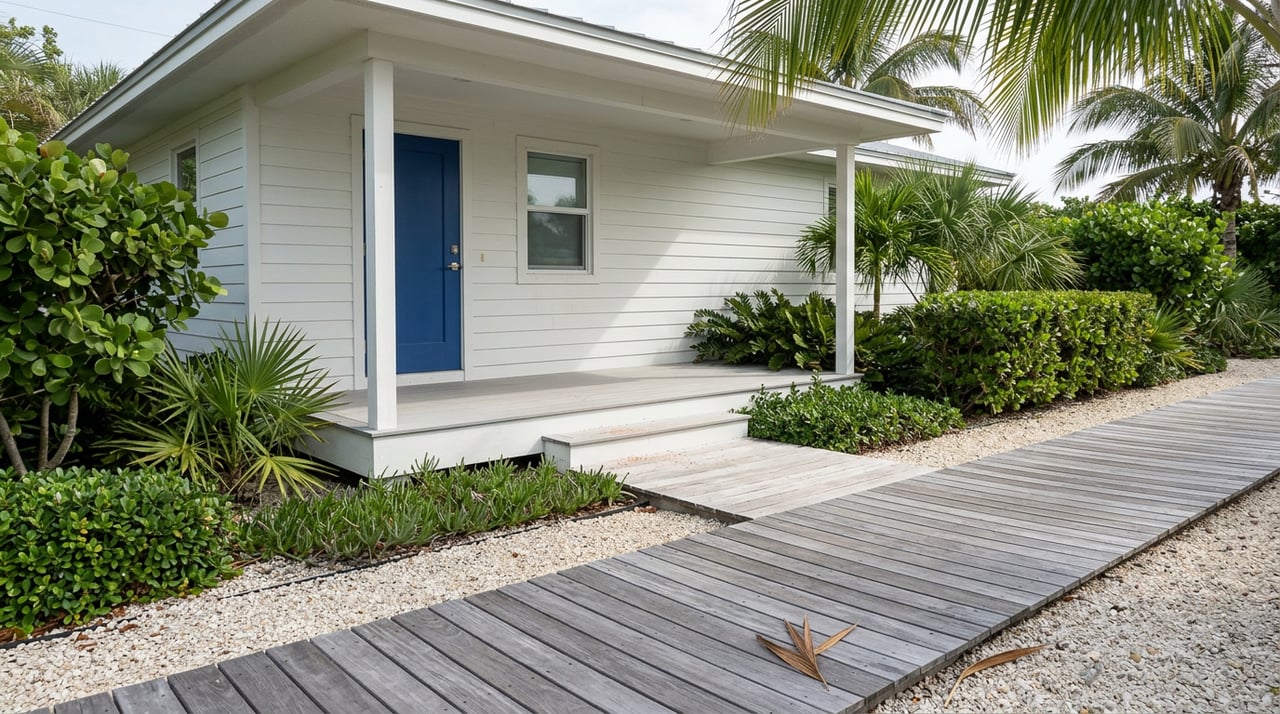
That mix shapes what buyers actually find on the market. Instead of large, uniform subdivisions, you are more likely to see established residential pockets, canal-front parcels, inland homesites, and lots with very specific physical and regulatory characteristics.
Buildable land can be limited
Monroe County’s Rate of Growth Ordinance, or ROGO, is designed to manage development in line with hurricane evacuation clearance times and sensitive environmental conditions. The county also treats Big Pine Key and No Name Key as their own ROGO subarea.
For buyers, the key takeaway is simple: not every parcel is equally buildable, and vacant land is not interchangeable. Rules tied to environmental protections and habitat conservation can make lot potential more limited and more nuanced than it first appears.
County acquisition programs also prioritize eligible vacant lots on Big Pine Key and No Name Key. That is another sign that open lots can be both limited and highly regulated.
Canal-front and inland properties may differ
Big Pine includes canal lots as well as inland parcels, and county code indicates that lot orientation and subdivision context can affect development potential. That does not automatically make one better than the other, but it does mean property-by-property analysis matters.
If you are evaluating future flexibility, resale positioning, or renovation plans, the details of the lot can matter as much as the home itself. A property that looks similar on paper may function very differently depending on its layout, location, and applicable standards.
Everyday Living on Big Pine Key
A lot of buyers assume a quieter island means giving up day-to-day convenience. Big Pine Key actually offers more local infrastructure than many expect.
Monroe County lists a public library branch in the Winn-Dixie Shopping Plaza, a senior meal site in the same plaza, a community center on Key Deer Boulevard, Watson Field Park with sports courts and a dog park, and Pine Channel Nature Park with a kayak and canoe launch, boardwalk, restrooms, picnic areas, and a viewing deck.
Those amenities support full-time living, not just weekend stays. So while Big Pine is quieter than more resort-oriented islands, it still functions as a practical place to live.
Expect U.S. 1 to shape your routine
Like much of the Keys, Big Pine Key is closely tied to the Overseas Highway. Visit Florida notes that the island is about 30 miles from Key West and typically around a 45-minute drive.
Monroe County also treats U.S. 1 as the island’s main street and the center of local circulation and commerce. So even if many essentials are available on-island, daily life often still includes some bridge-and-highway travel.
There is also public transit support. The Lower Keys Shuttle runs from Key West to Marathon with stops along U.S. 1, including Big Pine Key.
How Big Pine Compares to the Middle Keys
If you have been focused on Marathon, Key Colony Beach, or Duck Key, Big Pine Key may feel like a meaningful lifestyle shift. The difference is less about whether one area is better and more about which environment fits your goals.
Official tourism and local destination materials for Marathon, Key Colony Beach, and Duck Key highlight features like resort stays, private beach-club amenities, golf, marina access, spa services, pools, tennis, pickleball, and on-site dining. Big Pine’s public-facing identity leans more toward parks, wildlife, open space, and a laid-back Lower Keys atmosphere.
For some buyers, that means Big Pine feels more grounded and less packaged. If you want nature first and resort programming second, Big Pine may be a better fit than islands built around concentrated amenity clusters.
Big Pine may fit you if you value:
- A quieter Lower Keys setting
- Daily access to natural areas and outdoor recreation
- A more residential island feel
- Useful local services without a resort-heavy atmosphere
- A home base with access to both Marathon and Key West
You may want to look closer if you prefer:
- A more amenity-rich resort environment
- On-site lifestyle features as a top priority
- Less exposure to wildlife-related property considerations
- A housing search focused on more standardized lot conditions
What Buyers Should Pay Attention To
Before you buy on Big Pine Key, it helps to think beyond square footage and water views. The right purchase here often comes down to how well a property matches your daily habits and long-term plans.
Start with the lot itself. Because development rules and habitat protections can vary by parcel, you will want a clear picture of what exists now and what may be possible later.
Next, think about your comfort with the island’s pace and setting. If you love quiet roads, nearby nature, and a less commercial atmosphere, Big Pine can feel like a natural fit.
Finally, consider your driving patterns. Big Pine offers real everyday utility, but U.S. 1 still plays a major role in work, errands, appointments, and regional access.
The Bottom Line on Owning a Home on Big Pine Key
Big Pine Key offers a version of the Florida Keys that feels practical, scenic, and distinctly connected to the natural world. It is not defined by large resorts or polished amenity packages. It is defined by open space, everyday island living, and a strong conservation framework.
For the right buyer, that mix can be incredibly appealing. If you want a quieter Lower Keys home base with real neighborhood character and a strong sense of place, Big Pine Key deserves a serious look.
If you are comparing Big Pine Key with Marathon, Key Colony Beach, or Duck Key and want help weighing the lifestyle and property differences, Tracy Chacksfield offers a boutique, hands-on approach to buying in the Keys.
FAQs
What should buyers know about Big Pine Key’s location?
- Big Pine Key is in the Lower Florida Keys between Marathon and Key West, roughly between mile markers 33 and 29.5, and is often described by Monroe County as the gateway to the Lower Keys.
What should homeowners expect about Key deer on Big Pine Key?
- Key deer are a regular part of life on Big Pine Key, where the U.S. Fish and Wildlife Service says a large share of the population lives, so homeowners should expect to drive carefully and respect wildlife rules.
What are the wildlife rules for Big Pine Key residents?
- Refuge rules say you should not feed, touch, capture, or harass wildlife, and you should follow posted speed limits and other site-specific restrictions intended to protect animals and habitat.
What types of homes and lots are common on Big Pine Key?
- Buyers will typically find a mix of established residential neighborhoods, canal-front parcels, inland lots, and homes shaped by local development and environmental rules rather than large uniform subdivisions.
How does development control affect Big Pine Key property decisions?
- Monroe County’s growth management system and habitat protections mean that buildable land can be limited, and lot potential may vary significantly from one parcel to another.
What daily amenities are available on Big Pine Key?
- Big Pine Key has practical local amenities including a public library branch, community center, park facilities, a dog park, and Pine Channel Nature Park, along with shuttle service along U.S. 1.
How does Big Pine Key compare with Marathon or Duck Key?
- Big Pine Key generally offers a quieter, more nature-focused and residential feel, while places like Marathon and Duck Key are more commonly associated with concentrated resort and amenity experiences.